North America’s Forgotten Fruit
When you think of tropical flavors like banana, mango, and pineapple, your mind probably wanders to distant equator-adjacent islands. You likely do not picture the temperate riverbanks of Ohio or the forested understories of Virginia. Yet, hiding in the North American woods is a tree that yields a sweet, custard-like fruit that tastes exactly like a tropical escape.
This is the pawpaw (Asimina triloba), North America’s largest native tree-borne fruit. While it may seem like a newly discovered trendy food at modern farmer’s markets, the history of the pawpaw tree stretches back millions of years. It features a fascinating tale of ice-age beasts, Indigenous stewardship, founding fathers, and a dramatic modern comeback.
Ice Age Survivors and Megafauna Mysteries
The story of the pawpaw begins long before humans ever set foot on the continent. Geologically speaking, the pawpaw is an evolutionary anachronism. It is the most northern, cold-hardy member of the tropical Annonaceae (custard apple) family. Scientists think the fruit developed “to attract now-extinct megafauna like giant sloths, woolly mammoths, and other massive herbivores.”
These massive creatures ate the heavy, oblong fruits whole. They would walk long distances and drop the large, shiny seeds across vast geographies in their nutrient-rich dung. When these giant animals went extinct at the end of the last Ice Age, the pawpaw tree lost its primary evolutionary partners. The trees became restricted to moist bottomlands and river valleys, waiting for a new distributor to discover their sweet secrets.
Indigenous Cultivation and Sovereignty
That new distributor arrived in the form of Native American tribes. For thousands of years, Indigenous communities from the Midwest to the Atlantic coast recognized the immense value of the pawpaw patch. Nations including the Shawnee, Cherokee, Iroquois, Miami, and Osage didn’t just passively forage the fruit—they actively integrated it into their seasonal lifeways and agricultural practices.
The fruit’s arrival was so central to seasonal cycles that the Shawnee calendar actually named a month after it. Indeed, “the Shawnee word for ‘September’ translates to ‘pawpaw moon.’”
Native people ate the rich fruit fresh, mashed it into sweet puddings, or dried it into leather cakes to sustain them through the cold winter months. The utility of Asimina triloba extended far beyond the dinner plate, however. Its fibrous inner bark was stripped and woven into incredibly durable ropes, mats, fishing nets, and strings. Healers also utilized the leaves and bark to create medicinal tonics to soothe irritated skin and digestive ailments.
Colonial Times and Presidential Favorites
The first written European record of the pawpaw dates back to 1541. During the Spanish conquistador Hernando de Soto’s expedition through the Mississippi Valley, explorers observed Native Americans actively cultivating groves of a unique fruit. The European travelers, familiar with the tropical Caribbean fruits, noted a resemblance to the papaya. This linguistic mix-up eventually evolved into the common name “pawpaw”.
As early American society developed, the fruit found its way onto the tables of the nation’s elite. Both George Washington and Thomas Jefferson were known admirers of the unique understory tree. Jefferson famously planted pawpaws at his Monticello estate, while Washington reportedly counted chilled pawpaws as one of his absolute favorite seasonal desserts.
The fruit also proved to be a critical lifesaver in American history. In September 1806, as the Lewis and Clark expedition hurried on their return trek toward St. Louis, they found themselves completely out of provisions and far from civilization. For several days, the survival of the entire party rested on the wild pawpaw trees lining the Missouri riverbanks.
As William Clark noted in his journal on September 18, 1806, “The party appear perfectly contented and tell us that they can live very well on the poppaws.”
The Fall Into Commercial Obscurity
During the Great Depression and World War II, the pawpaw earned the affectionate moniker of the “poor man’s banana”. When commercial fruit shipments were too expensive or unavailable, rural families took to the woods to harvest this free, nutrient-dense treat.
However, as the 20th century progressed and grocery systems industrialized, the pawpaw vanished from mainstream awareness. The very qualities that make the pawpaw delightful also make it a commercial nightmare. A ripe pawpaw softens rapidly at room temperature. It has a brief shelf life of only two to four days before it turns brown and mushy.v The thin skin and soft, custardy interior mean the fruit bruises easily and cannot withstand standard commercial shipping crates. Fruits on a single tree do not ripen all at once; they mature over a multi-week span, complicating large-scale agricultural harvesting. Because it couldn’t sit on a grocery store shelf next to the thick-skinned, sturdy imported bananas, the pawpaw was largely forgotten by the public.
A 21st-Century Resurgence
Today, the pawpaw is experiencing a major culinary and agricultural renaissance. Foodies, craft brewers, and sustainable farmers are looking to celebrate regional food history, leading this native treasure out of the shadows.
Dedicated events, such as the famous Ohio Pawpaw Festival, draw thousands of visitors every autumn to sample pawpaw ice cream, pastries, and beers. Meanwhile, researchers are hard at work developing small-scale processing methods to freeze the pulp, unlocking a stable way to share this ancient flavor year-round. There are also pawpaw festivals in West Virginia, Kentucky, Pennsylvania, Maryland, and Illinois! (They are all in September, so it’s time to plan your trip!)
The pawpaw is a living link to the deep ecological and cultural heritage of the continent. Seeking out a native pawpaw patch this autumn offers a taste of the exact same wild, tropical sweetness that sustained mammoths, indigenous cultures, and American history makers for millennia.
Pairing Pawpaw with Maple
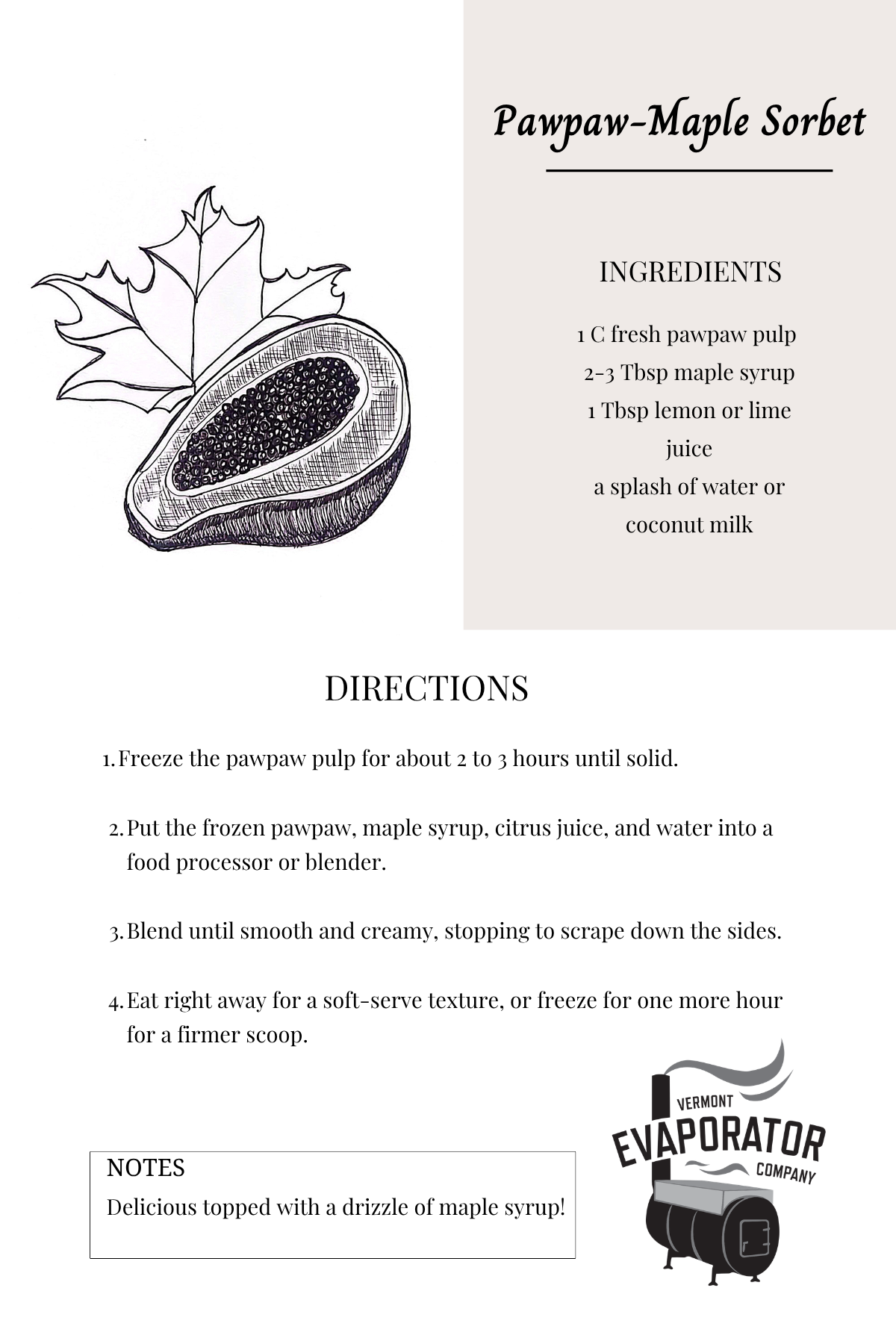
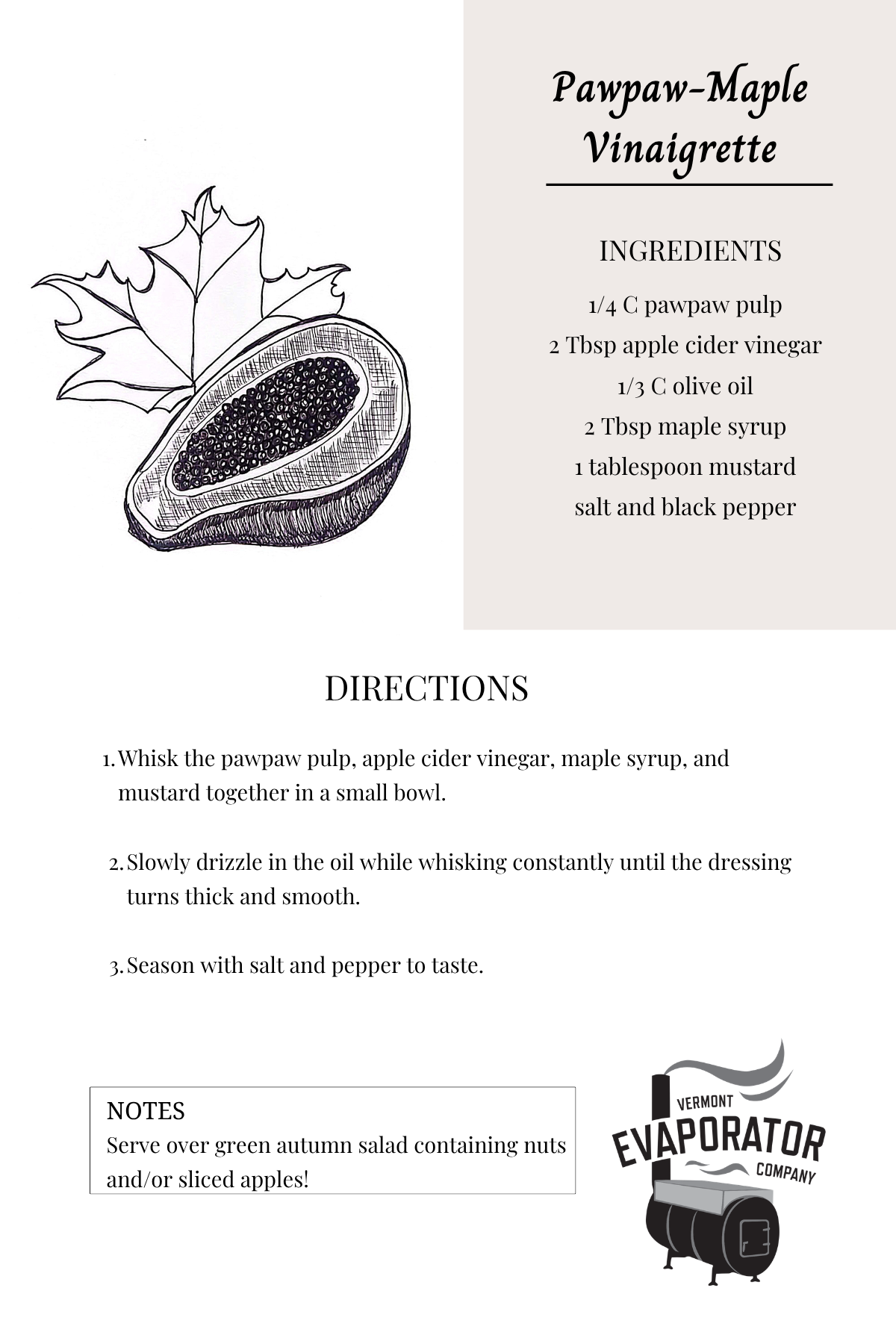
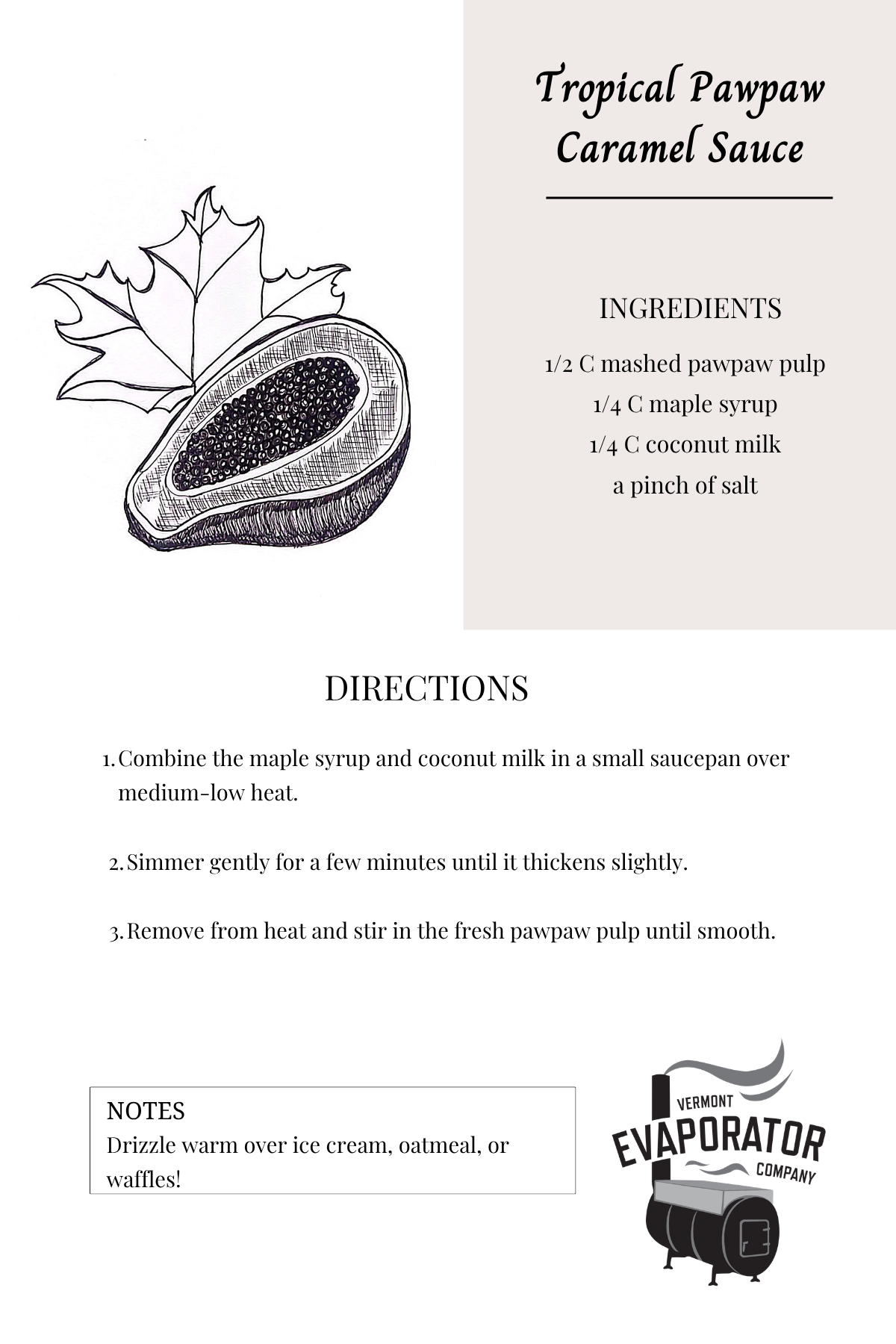
We will be attending the Ohio Pawpaw Festival for the first time this year! In preparation, we’ve developed these recipes that use both maple syrup and pawpaw – two native North American flavors! If you can get your hands on some pawpaw this fall, check them out!