
An Email from Poland
A few years ago, an email from Poland hit the inbox. Would we please handle the export of a Bucket RO and send along some dropline kits to Łódzki (or Łódź), Poland? The answer we gave was yes! And that’s how we first met Bartosz Belina-Prażmowsk, a young man who, among other things, means to start the first-ever Polish birch syrup company just a few kilometers away from the geographical center of the country.
Bartoz has just finished up his degrees in Economics and Business at the University of Amsterdam, a program that, like many programs in the Netherlands, says Bartosz, is actually instructed in English! He was vacationing in Crete when we spoke and kindly took an hour away from fun to tell me all about his birch-syrup dreams.
Birch Syrup in Eastern Europe
Bartosz started by telling us a little bit about the history of birch products in Eastern Europe. Historically, he said, birch sap has been used in Eastern Europe, including Ukraine, Belarus and Russia, for various products like vodka, wine and beer. There are no commercial birch syrup operations in Europe, but Eastern European families tap birch trees to drink the sap or, less frequently, to boil it down to syrup. Sound familiar?
Birch sap production is especially big in Ukraine, whereas, according to Bartosz, in Poland the birch tree has historically been treated, commercially at least, like a “junk” tree. In the 20th Century, it was the pine tree that supported the country’s furniture industry. If Bartosz has his way, the birch will support the Polish birch syrup industry in the 21st Century!
The Belina-Prażmowsk Family and Poland
The Belina-Prażmowsk family is as Polish as they come, says Bartosz. In the 18th Century, Poland lost its sovereignty for what would become 123 years in a series of land-grabs called “The Three Partitions of Poland.” During that time, Bartosz’s family’s hometown of Łódź went from Polish to Prussian to Russian before returning to Polish sovereignty at the close of WWI in 1918. But his family never considered themselves to be anything other than Polish.
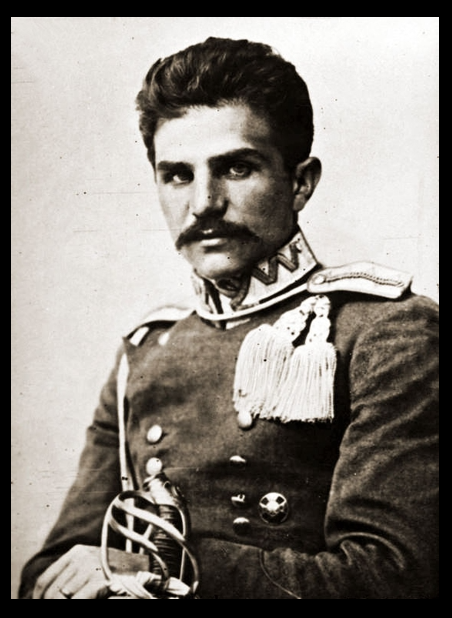
And Bartosz can prove it! Some of his ancestors were notable enough to have earned pages on Wikipedia. This handsome fellow was Władysław Belina-Prażmowski (1888-1938), a Polish soldier that fought, among other things, to keep Poland independent from Russia. Władysław would later become the mayor of Kraków, and then Viovide (Governor) of the nearby then-Polish state of Lwów. (Some of what was once the Polish state of Lwów now belongs to the Ukraine.) You can see Władysław’s very-Polish family tree here. But we digress . . . (Hi, nerds!) Hopefully, Bartosz will one day have a Wiki page of his very own, as the father of the Polish birch syrup industry. Get your headshot ready, Bartosz!
The Belina-Prażmowsk Family and Birch Syrup
Bartosz has been tapping birches in his backyard for sap since he was about nine years old. When he later learned on YouTube that the sap could be boiled down to make syrup, Bartosz gave it a try! As a result, Bartosz’s family has developed a taste for salmon glazed in homemade birch syrup. And Bartosz himself developed a taste for innovation.
Bartosz was kind enough to share his family’s recipe with us. (Scroll down to the end of this post for to see it.) You can easily obtain birch syrup online from Kahiltna Birchworks of Alaska. Then you can give the Belina-Prażmowsk Family recipe a try.
The Taste of Polish Birch Syrup
Some of you are probably familiar with the rich, hard-to-describe taste of birch syrup made in the United states. (Does it taste like balsamic vinegar? Is it earthy? Does it taste like molasses?) After all, Alaska is a significant producer of the world’s birch syrup. But Bartosz’s syrup tastes different, he says.
Bartosz firmly believes that his birch syrup offers a superior flavor because he does not boil the sap. According to Bartosz, birch sap has a lower caramelization point than maple sap. It also has a much lower sugar content: it takes 100 litres of birch sap to make a litre of birch syrup, he said. Bartosz uses an RO to bring his sap from from 100:1 to 10:1 and then simmers it at about 93 degrees celsius until it reaches the desired consistency. Bartosz reports that this process takes exactly “forever,” but because he never boils the sap, results in a flavor without a hint of the “burn” people sometimes taste in American birch syrup.
Bartosz’s First Commercial Birch Syrup Season
The journey to produce high-quality birch syrup in Poland is not without its hurdles, however. According to Bartosz, Poland is densely enough populated so that there aren’t that many large, free-standing forests there. And most of the forests that do exist, he says, are either privately held or state-owned national forests. Each presents complications for commercial syrup production.
Despite these challenges, Bartosz and his family have made progress. In central Poland, birch season typically starts in mid-February, when the nights are below freezing and the days are above freezing, and extends beyond this freeze-thaw cycle. (This is unlike the maple season, which stops at the end of the cycle.) Last winter, Bartosz and his family were able to tap 50 trees belonging to a neighbor for free. They used Vermont Evaporator Company dropline kits and food-safe buckets situated on the ground. From those trees, they collected approximately 1,800 liters of sap, which yielded about 16 liters of birch syrup after condensing and heating.
Bartosz is using the syrup he made this year sparingly for home consumption and to market the idea of a Polish birch syrup industry. He is even attempting to get the attention of celebrity chefs like Magda Gessler, reportedly the “Polish Gordon Ramsay,” as a method of appealing to high-end chefs and baristas to use the taste of birch in their creations.
Next for Polish Birch Syrup
Looking ahead, Bartosz has ambitious plans, but first needs to find a reliable source of Polish birch sap. For next year, he intends to petition Polish ministries for cheaper access to national forests. He then intends to grow his operation from its current size of 50 trees and start selling on the open market.
Bartosz’s long-term vision includes opening a chain of tavern-style businesses that produces and sells traditionally Polish food products like birch syrup, birch-based drinks, and cheeses, and smoked meats.
It’s clear that Bartosz’s passion for birch syrup is not just about a product; it’s about connecting with his family’s history and bringing a unique Polish product to a wider audience. We’re excited to see what the future holds for his birch syrup venture and wish him lots of luck!
Birch Syrup Glazed Salmon (Serves 4)
• 4 salmon fillets (skin-on or skinless, ~5-7 oz. each)
• 2 tbsp olive oil
• 2 tbsp lemon juice (freshly squeezed)
• 2 garlic cloves, finely minced
• 1 tbsp fresh thyme leaves (or 1 tsp dried)
• 1 tbsp fresh dill, chopped (plus more for garnish)
• 1 tsp salt
• ½ tsp black pepper
For the Glaze
• 3-4 oz of birch strup (to taste)
• 1 tbsp DIjon mustard
• 1 tbsp soy sauce
• 1 tsp apple cider vinegar (or lemon juice)
• 1 tsp butter (optional, for richness)
Instructions
1. Marinate the Salmon
- In a bowl, whisk together olive oil, lemon juice, garlic, thyme, dill, salt, and pepper
- Place salmon fillets in a shallow dish or resealable bag. Pour marinade over the salmon, coating well.
- Cover and refrigerate for 30–60 minutes (no longer than 2 hours, or the lemon may start to “cook” the fish).
2. Make the Glaze
- In a small saucepan, combine birch syrup, mustard, soy sauce, and vinegar.
- Bring to a gentle simmer over low heat, stirring until slightly thickened (about 3–4 minutes).
- Whisk in butter if using, then remove from heat.
3. Bake and Glaze
- Preheat oven to 200°C / 400°F. Line a baking sheet with parchment.
- Place marinated salmon fillets skin-side down on the sheet, cover with the birch syrup glaze.
- Bake the salmon in the oven while occasionally brushing with the glaze that’s accumulating in the tray, until it is just cooked through and caramelized on top.